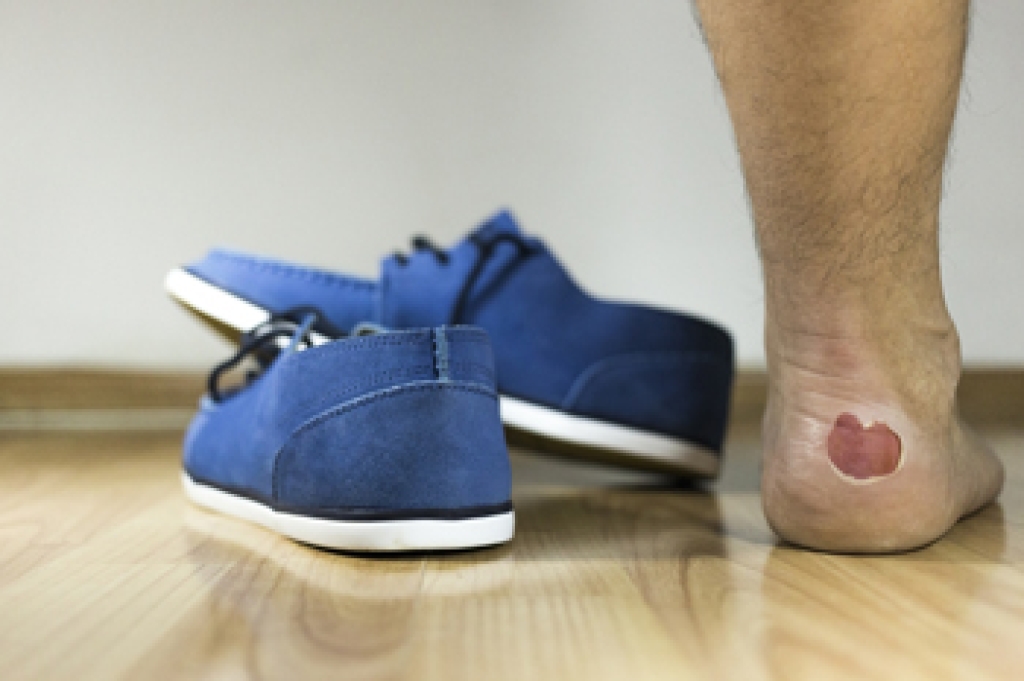
Foot blisters are one of the most common skin conditions that affect active individuals and others who spend long hours standing or walking. A blister forms when repeated friction or pressure causes the upper layer of skin to separate from the layers beneath it. Fluid then collects in the space as a protective response. Blisters frequently affect the heels, toes, and the ball of the foot, especially when footwear does not fit properly or when moisture builds up from sweat.
Early symptoms often include a hot spot on the skin, followed by redness and mild irritation. As the blister develops, it becomes a raised, fluid-filled area that may feel tender or painful. Walking can become uncomfortable, and pressure from shoes may worsen the irritation. If a blister breaks open, the underlying skin becomes exposed and more vulnerable to infection. Proper care involves keeping the area clean, dry, and covered with a sterile dressing. Avoid removing the top layer of skin, as it helps protect the healing tissue.
Several factors contribute to the development of foot blisters. Tight-fitting shoes, poorly designed insoles, and rough seams can create repeated friction. Moisture from sweating softens the skin and increases susceptibility to damage. Long-distance walking, running, and high-impact activities also raise the risk. In addition, burns, allergic reactions, and viral skin infections may cause blister-like symptoms, which require careful evaluation to determine the correct treatment approach.
Prevention plays a key role in maintaining foot health. Wearing well-fitted, supportive shoes and moisture-wicking socks can significantly reduce friction. Keeping feet dry and using protective padding in high-risk areas may help prevent recurrence. Paying attention to early warning signs allows for quick action before a blister worsens. If you have foot blisters, it is suggested that you see a podiatrist for a proper diagnosis and safe treatment.
Blisters may appear as a single bubble or in a cluster. They can cause a lot of pain and may be filled with pus, blood, or watery serum. If your feet are hurting, contact Darren Day, DPM of Hawaii. Our doctor can provide the care you need to keep you pain-free and on your feet.
Foot Blisters
Foot blisters are often the result of friction. This happens due to the constant rubbing from shoes, which can lead to pain.
What Are Foot Blisters?
A foot blister is a small fluid-filled pocket that forms on the upper-most layer of the skin. Blisters are filled with clear fluid and can lead to blood drainage or pus if the area becomes infected.
Symptoms
(Blister symptoms may vary depending on what is causing them)
- Bubble of skin filled with fluid
- Redness
- Moderate to severe pain
- Itching
Prevention & Treatment
In order to prevent blisters, you should be sure to wear comfortable shoes with socks that cushion your feet and absorb sweat. Breaking a blister open may increase your chances of developing an infection. However, if your blister breaks, you should wash the area with soap and water immediately and then apply a bandage to the affected area. If your blisters cause severe pain it is important that you call your podiatrist right away.
If you have any questions, please feel free to contact our offices located in Honolulu and Kahuku, HI . We offer the newest diagnostic and treatment technologies for all your foot care needs.